

Skip to content

Choose a course and begin enrollment

Selected course: AP Physics

Choose Your Course

AP-aligned physics foundation

AP Physics

Build the physics foundation AP demands—concepts first, then sustained problem solving with feedback on reasoning.

Projectile arc, inclined plane, planetary orbits, and waves in soft studio light.
Format
Live online through Zoom
Weekly schedule
Two sessions per week · 1-hour lecture + 1-hour problem-solving seminar
Start date
August 17, 2026
Program length
Two 4-month terms, separated by winter break
Language
English
Tuition
$145/month

Billed monthly

Who this course is for

  • Students seeking stronger school physics performance
  • Learners preparing for advanced physics study
  • Students working toward AP-level readiness
  • Learners who want structured quantitative problem solving

What students strengthen

  • Conceptual understanding
  • Mathematical modeling
  • Graph and diagram interpretation
  • Multi-step problem solving

Delivery

  • Live instruction through Zoom
  • Structured lessons
  • Teacher-reviewed assignments
  • Workbooks and assessments
  • Teacher feedback
  • Learning Platform access after login
Program structure & enrollment
Language
  • All instruction and course communication are in English.
Program structure
  • First term: 4 months
  • Second term: 4 months after winter break
  • Whether the second term requires separate continuation enrollment is confirmed during enrollment review
Learning emphasis
  • Conceptual understanding and quantitative problem solving toward AP-aligned preparation
  • Structured assignments, assessment, and teacher feedback
  • No AP score or timeline guarantees
Enrollment process
  • Tell us about your student to begin review
  • Placement depends on readiness, capacity, and program fit
  • Submitting an inquiry does not create an account or guarantee placement

Learn science.Learn to think like a scientist.

Infinity Science Institute teaches physics and mathematics through careful instruction, challenging problem solving, and student research. Students build strong foundations, then have opportunities to go further through olympiad preparation and mentored research.

Structured Learning · Olympiad Preparation · Research Pathways

From curiosity to investigation

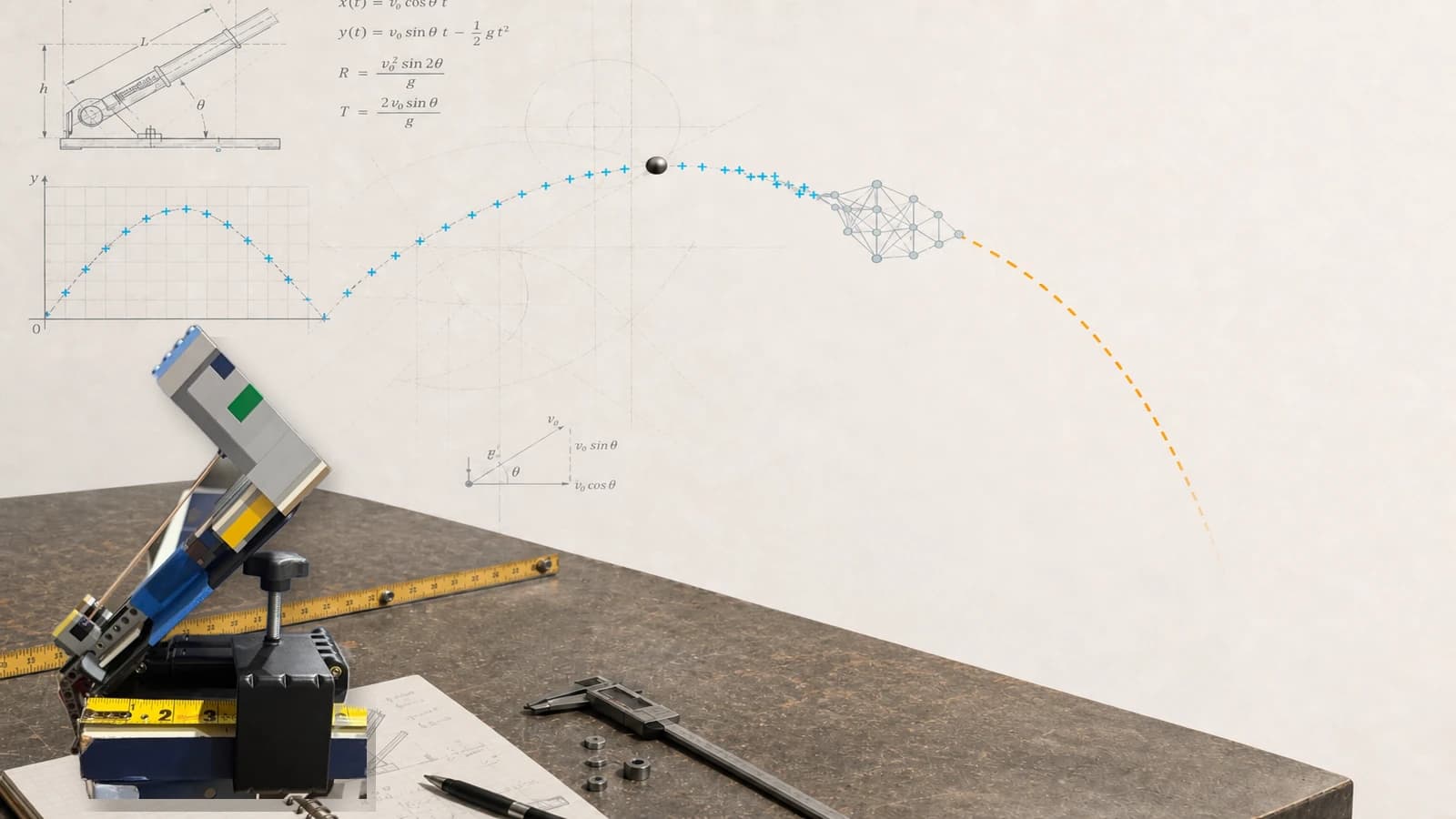
Teaching Artificial Intelligence the Laws of Physics — editorial research illustration

Tsengel Buyandelger

Research Spotlight

Teaching Artificial Intelligence the Laws of Physics

An end-to-end experimental workflow that couples a custom projectile launcher and motion tracking with Physics-Informed Neural Networks to estimate launch parameters, air resistance, and predict future trajectories from only the initial flight segment.

Read the story
  • Wind Turbine Design Optimization

    Anand Demchig

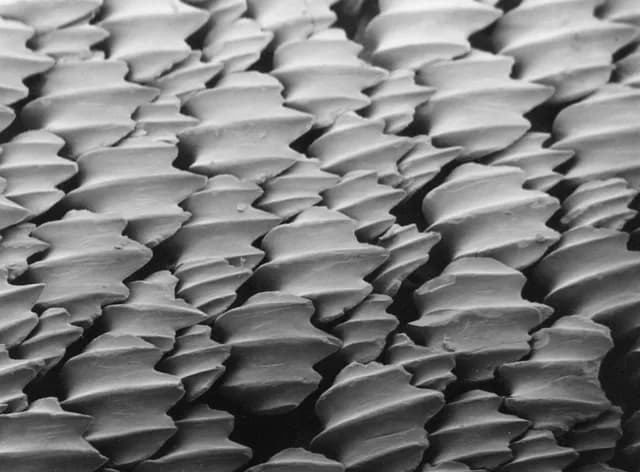
    Scanning electron micrograph of shark dermal denticles (placoid scales)
    Image credit: Oceana.org

    Anand investigates how wind-turbine blade geometry changes rotational speed and electrical power. After reviewing modern turbine limits, he designed a lab framework to compare blade configurations—and connects the work to biomimetic surfaces such as shark dermal denticles, whose micro-ridges reduce drag in flowing fluid.

    See in Research Hub
  • Monitoring Plant Growth Using Image Analysis and Environmental Data

    Iltsuu Idersuut

    This project investigates whether plant health and growth can be monitored using photographs taken with a standard smartphone together with environmental measurements such as temperature, rainfall, soil pH, and plant height.

    See in Research Hub
  • Exploring Interactive Mathematics with Desmos

    Marcus Khishigbaatar

    This project explores the creative side of mathematics through Desmos.

    See in Research Hub

AP Physics

Build the physics foundation AP demands.

Students learn concepts, solve problems, work through structured practice, and receive feedback on their reasoning—not only their final answers. Live Zoom classes, classroom workbooks, and teacher review are central. Simulations and platform tools support class work; they do not replace teaching.

Interactive simulation

Elastic pendulum — coupled oscillation

Drag the mass to set initial conditions

An interactive demo of an elastic pendulum—a mass on a spring—showing coupled radial and angular motion. Choose a frequency-ratio preset, then start the motion to watch the trajectory form.

Explore AP Physics
  • Fundamentals First

    Lessons begin with physical ideas, then move into the mathematics that expresses them.

  • Progress through reviewed work

    Teachers review student work and adjust what comes next based on the reasoning they see.

  • Finding what needs work

    Quizzes and teacher review help locate misconceptions before moving on.

  • Reasoning with models

    Students practice with diagrams, models, and simulations that make the reasoning visible.

  • Steady practice

    Lesson quizzes, topic practice, and teacher feedback decide when a student is ready for harder work.

  • Beyond AP Physics

    Students who are ready may continue into olympiad preparation or mentored research.

How we work with students

  • Teachers guide the work

    Teachers teach live, review student reasoning, and decide what comes next from the work itself.

  • Research as real investigation

    Students who want to pursue a question of their own can enter mentored investigation through the Research Hub.

  • Room to go further

    Strong foundations make harder work possible: AP-aligned physics, olympiad problem solving, and mentored research.

Explore olympiad preparationSee student research

OlympiadResearch

Students in the advanced pathway have participated in the F=ma examination. Infinity Science Institute provides Olympiad and F=ma preparation; it is not an official organizer, partner, or endorser of the examination.

Teaching today is live classes, workbooks, practice, and teacher review.